
The 22nd Annual Conference of the African Forum for Utility Regulators (AFUR), held from 23–27 March 2026 in Swakopmund, Namibia, brought together over 200 regulators, policymakers, industry leaders, and development partners to discuss innovative, technology-driven approaches to strengthening Africa’s utility sectors. The African Mini-grid Developers Association (AMDA) played a central role in advancing discussions on how mini-grids can accelerate universal energy access across the continent.
During the conference, AMDA, in partnership with AFUR, hosted a dynamic, solutions-focused session that moved conversations from traditional dialogue to concrete regulatory action. This session responded to calls made during AMDA’s country missions in 2025, where regulators requested a structured space for peer-to-peer exchange on what works in mini-grid regulation and deployment.
The discussion explored how progressive regulations can unlock investment, foster scale, and strengthen the bankability of mini-grid projects, an essential step for addressing energy poverty and driving economic development in rural and underserved communities.
A highlight of the session was a compelling presentation by AMDA CEO, ‘Lamide Niyi-Afuye, who showcased the M300 initiative, a practical 17-step action plan for African regulators to create enabling regulatory environments that support sustainable mini-grid expansion. The initiative emphasizes clarity, predictability, and alignment with developers’ realities, three elements vital for investor confidence.
A major highlight was the mini-grid panel discussion, moderated by Myrna Nicintije, AMDA’s Communications and Partnerships Associate. The panel featured influential voices in the African energy regulatory ecosystem:
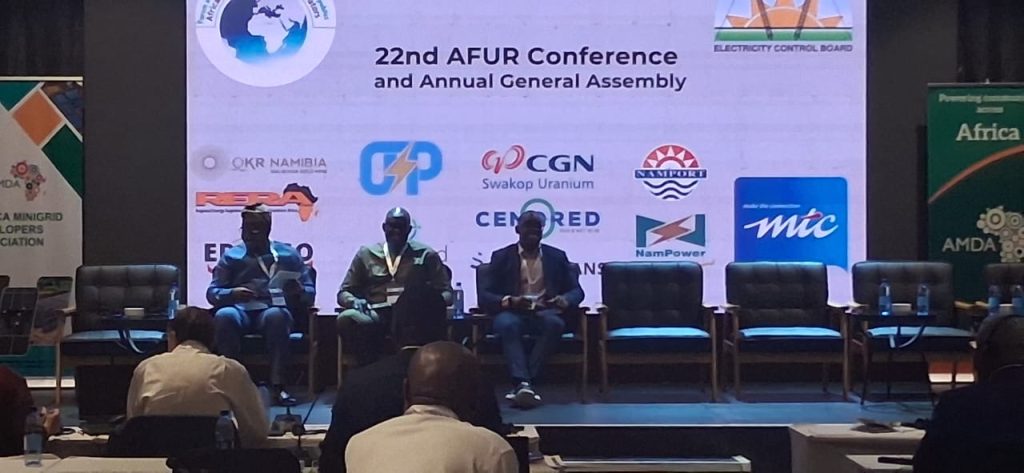
The panelists convereged on a unified message:
In his submission, Mr. Nget stated that there are 2 mini-grids in The Gambia and one in the pipeline. However, due to the size and nature of The Gambia, mini grids will not be common. He stated that The Gambia has more 90% access to electricity and is expected to have full access by the end of 2026. Due to this, the demand has significantly increased, and affordability is also a challenge. He called on investors to invest in generation either as IPPs or Distributed Generations.
Their discussion reinforced the need for harmonized regulatory frameworks that reduce uncertainty for developers while ensuring affordability and consumer protection.
Looking beyond traditional mini-grid models, the panel also explored emerging innovations such as meshgrids, which are increasingly being integrated into Results-Based Financing (RBF) programs. Lessons were shared from the Rural Electrification Agency of Nigeria, demonstrating how innovation and execution can converge to unlock new opportunities for last-mile energy access.
This future-oriented conversation echoed the broader conference theme of leveraging AI, digital transformation, geospatial technologies, and big data for more inclusive and resilient utility regulation across Africa.
Closing the session, AMDA’s Regional Coordinator for West & Central Africa, Chimaobi Omeye, captured the essence of the dialogue:
“Regulators have to be the architects of responsible innovation.” Said Chimaobi Omeye,AMDA
His message underscored the imperative for regulators not only to adapt to technological shifts but to actively shape innovation pathways that uphold consumer interests while catalyzing sustainable energy markets.
The AMDA-led panel at the 22nd AFUR Conference reaffirmed the critical role of strong regulatory leadership, cross-border knowledge exchange, and innovative market mechanisms in unlocking the full potential of mini-grids across Africa. As countries increasingly adopt advanced regulatory tools and adaptive frameworks, the continent moves closer to achieving universal, reliable, and sustainable electricity access.
The 22nd Annual Conference of the African Forum for Utility Regulators (AFUR), held from 23–27 March 2026 in Swakopmund, Namibia, brought together over 200 regulators, policymakers, industry leaders, and development partners to discuss innovative, technology-driven approaches to strengthening Africa’s utility sectors. The African Mini-grid Developers Association (AMDA) played a central role in advancing discussions on how mini-grids can accelerate universal energy access across the continent.
The 22nd Annual Conference of the African Forum for Utility Regulators (AFUR), held from 23–27 March 2026 in Swakopmund, Namibia, brought together over 200 regulators, policymakers, industry leaders, and development partners to discuss innovative, technology-driven approaches to strengthening Africa’s utility sectors. The African Mini-grid Developers Association (AMDA) played a central role in advancing discussions on how mini-grids can accelerate universal energy access across the continent.
PURA is the Public Utilities Regulatory Authority responsible for regulating public utilities and certain service providers. PURA does not regulate institutions such as banks, labor offices, immigration services, or other non-utility government agencies.
PURA’s mandate includes regulating tariffs, setting and enforcing service standards, protecting consumers, promoting fair competition, and ensuring transparency and accountability in regulated sectors.
No. PURA does not provide services such as mobile phone, internet, electricity, or water. These services are provided by licensed operators. PURA regulates and supervises them.
PURA regulates public utilities and services such as:
PURA protects consumers by:
Consumers can submit complaints by:
Complainants are advised to first raise the issue with the service provider before escalating it to PURA.
When submitting a complaint, please include:
Disconnection procedures must follow approved rules. Consumers must be given notice and reasons for disconnection, except in cases such as illegal connections or safety risks
Yes. PURA reviews and approves tariffs to ensure they are fair, cost-reflective, and affordable while allowing service providers to operate sustainably.
Tariff decisions are based on:
Yes. PURA conducts public consultations, stakeholder meetings, and hearings to gather input before major regulatory decisions, including tariff reviews.
No. All regulated service providers must be licensed or authorized by PURA and comply with the terms and conditions set by the Authority.
You should report the issue to the service provider first. If the matter is not resolved, you may escalate the complaint to PURA with supporting evidence.
All relevant laws, regulations, decisions, and guidelines are available on the PURA website
Contact details, including office address, telephone numbers, and official email addresses, are available on the “Contact Us” page of the PURA website.
Customers may complain about issues such as:
Yes. Customers in The Gambia have responsibilities including:
When PURA receives a complaint, it is registered and reviewed. PURA may request additional information, engage the service provider for clarification, and assess the matter against regulatory standards. PURA then issues guidance, mediation, or a regulatory decision where necessary.
All enquiries related to short codes, numbering resources, or renewals should be submitted formally to PURA through the official contact details provided on the website. Assigned officers will respond based on the nature of the request.

94 Kairaba Avenue, KMC, The Gambia
Phone: +220 4399601
Fax: +220 4399605
Email: info@pura.gm / corporateaffairs@pura.gm
Monday – Thursday: 08:30am – 04:00pm
Friday: 08:30am – 12:30pm
Saturday & Sunday: Closed
© The Gambia Public Utilities Regulatory Authority 2026